
Inspection basics
Finding Hidden Moisture: Moisture Meters vs. Thermal Imaging
 Finding Hidden Moisture: Moisture Meters vs. Thermal Imaging
Discover how professionals use moisture meters and thermal imaging to locate hidden water damage and potential mold sources in your property.
The short answer
Professional inspections use moisture meters and thermal imaging cameras to locate hidden water problems that support mold growth. These tools allow us to pinpoint damp areas and temperature variations, ensuring that our sampling strategy is accurate and addresses your specific concerns.
Moisture Meters for Material Assessment
A moisture meter provides a direct measurement of water content in building materials like drywall, wood, or subflooring. By comparing readings from affected areas to those in dry, unaffected spots, our inspectors can identify hidden moisture accumulation. This data is essential for determining where conditions might favor mold growth.
Thermal Imaging for Temperature Patterns
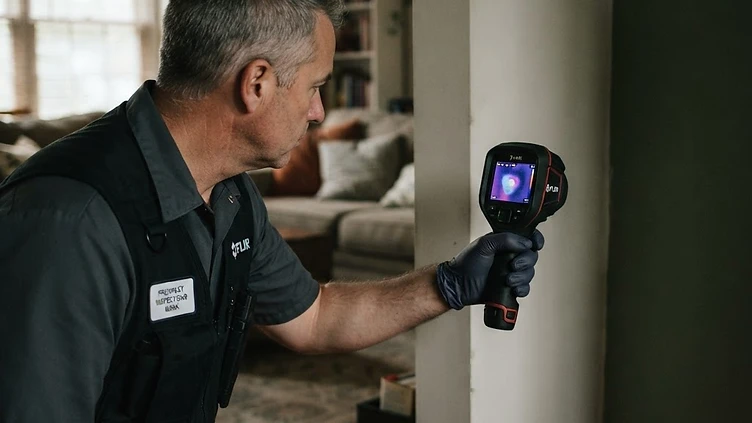
Thermal cameras detect surface temperature variations, which act as a visual guide to hidden problems. Cold spots often indicate active leaks, missing insulation, or condensation behind walls. While these cameras do not see through walls, they highlight the specific areas where we should apply more focused investigation.
Using Data to Direct Testing
We synthesize findings from visual inspections, moisture meter readings, and thermal patterns to create a clear plan for air or surface sampling. This process ensures we focus our efforts on the most likely problem zones. This targeted approach provides you with reliable, actionable results regarding your indoor air quality.

Objective Reporting for Your Records
PureAir focuses exclusively on independent testing and moisture assessments. We do not perform mold cleanup or home repairs. This independence means our reports provide unbiased data that you can trust when discussing necessary repairs with a contractor.
Questions readers ask
Can thermal imaging detect mold growth directly?
No. Thermal cameras identify temperature differences on surfaces, not mold itself. We use these temperature patterns to find areas where moisture is likely present, which then guides us on where to perform specific mold testing.
Is moisture detection always included in an inspection?
Yes. Every professional inspection includes a moisture assessment. We use specialized equipment to locate water sources because identifying moisture is the most effective way to understand potential mold risk in your home or office.
Does PureAir provide repair or mold removal services?
We do not offer repair, remediation, or mold removal services. Our role is to provide an objective assessment of your property. We deliver a detailed report that outlines our findings, which you can then provide to any specialist you choose for repairs.